The aftermath of Hurricane Ida tested every commercial roof in South Louisiana. The ones that held best weren't always the most expensive — they were the ones detailed correctly at the perimeter. Here's what we learned, and what it took to put one back together.
What Wind Actually Does to a Commercial Roof
People picture hurricane damage as the membrane being peeled off. The reality is subtler: wind creates negative pressure (uplift) at the building's edges and corners, where pressure differentials are highest. A roof's failure point is almost always the perimeter — the parapet caps, edge metal, and the first row of fasteners. Get those wrong and the rest of the field follows when the storm hits.
Where Durability Comes From
Three details separate a hurricane-rated commercial roof from one that's just nominally rated:
- Fastener pattern at the perimeter and corners. Code minimum is the floor — we run tighter patterns at the building edges where uplift is 2-3× the field load. The numbers are calculated, not guessed.
- Continuous cleat under the edge metal. A surface-screwed edge fascia is a hurricane time bomb. We install a continuous cleat first, then the cap snaps over it. The cap can't lift unless the cleat tears off the wood — which it won't.
- Pre-molded flashings, not field-fabricated. Every penetration is a potential failure point. Pre-molded boots and corner flashings beat anything cut from sheet stock.
Replacement Done Right
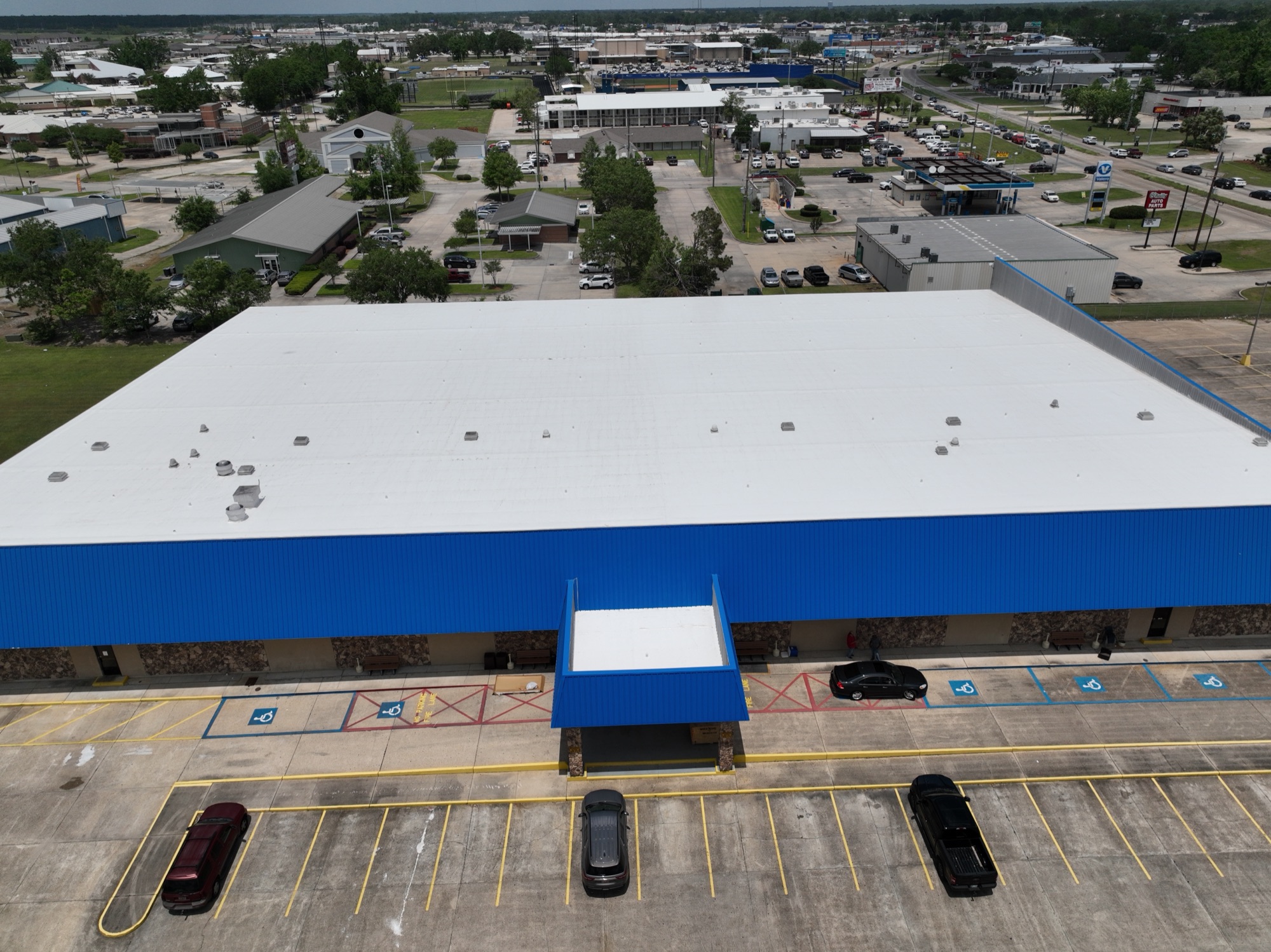
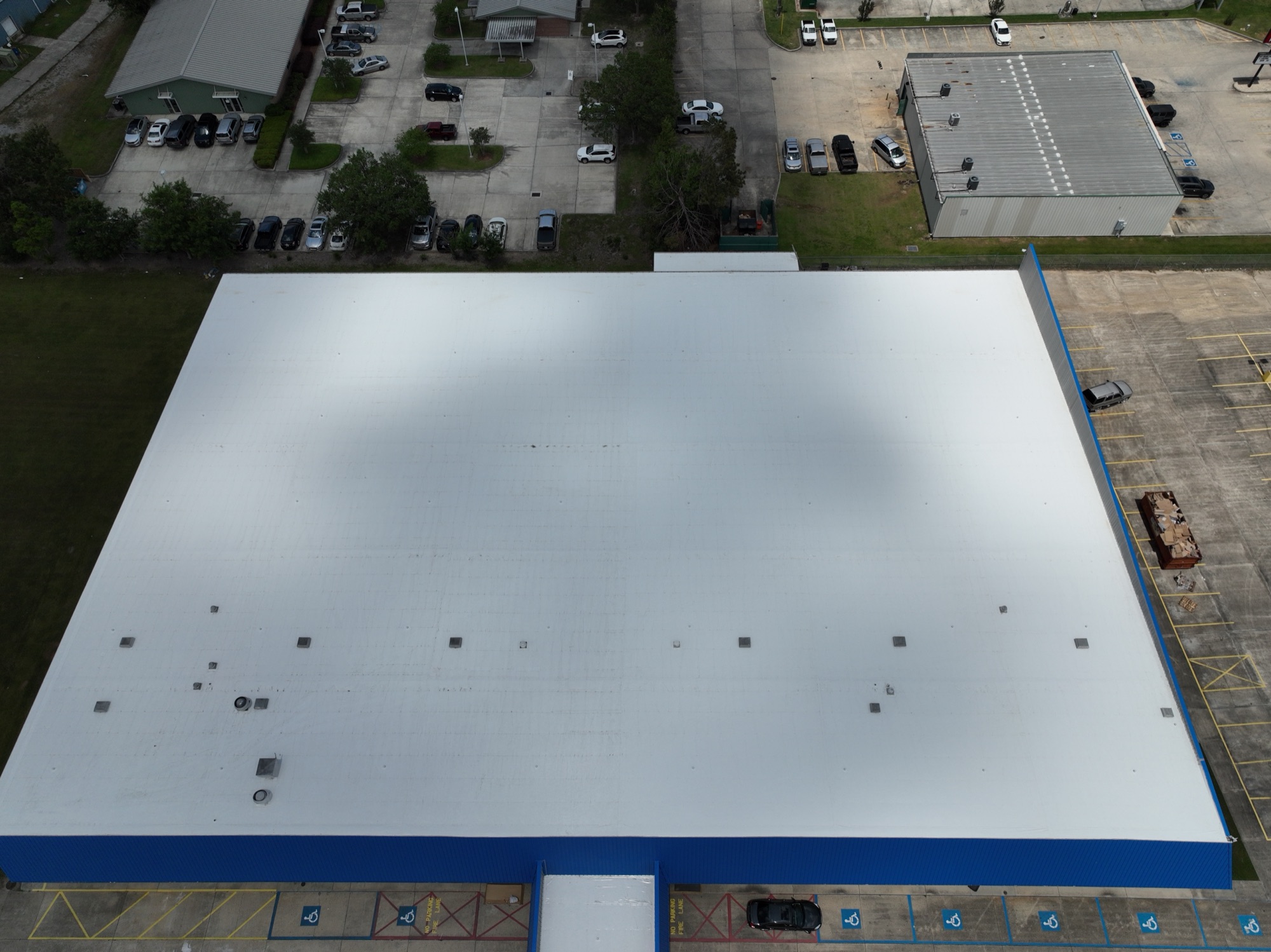
This 30,000+ sq ft retail roof had taken serious damage during Ida. The original modified-bitumen system had reached its life expectancy and the storm finished it. We tore it off, re-decked the wet sections, and installed a new fully-adhered TPO with reinforced perimeter fastening, continuous cleated edge metal, and new pre-molded flashings on every penetration. The retail tenants below stayed open the entire time — nights and weekends only for tear-off, daytime work for installation.
Storm damage you haven't documented yet?
Most insurance claims have a 1-year deadline from the date of loss. We're HAAG-trained and handle the documentation end-to-end.
REQUEST A STORM INSPECTION